The Economics of Private Flight: A Discreet Guide to Buying Time
–

Private aviation is a language of intention. It is the decision to convert uncertainty into certainty; to transform a day lost to connections into two hours spent with a child before dinner. It is also, candidly, a balance between romance and arithmetic. Cabins, crews, and champagne sit atop a foundation of fixed costs, variable costs, and capital choices. In this editorial guide, we arrange the options from the lightest touch to complete command — and translate their numbers into a story you can use.
A Ladder of Access
There isn’t one “private jet experience.” There are many, arranged like rungs on a ladder. At the lower rungs, you rent convenience by the trip. At the upper rungs, you buy control — of aircraft, of schedule, of every minute between curb and sky. The right choice is not a status symbol; it’s a workload, a route map, an annual hour count, a preference for spontaneity or ritual.
The Lightest Touch — Empty Legs & By-the-Seat Shuttles
Empty legs are serendipity made tangible: repositioning flights that would otherwise run empty, offered at dramatic discounts. The price feels like a secret whispered by the dispatcher — wonderful when timing aligns, irrelevant when it doesn’t. By-the-seat shuttles are the commuter rail of the private set: fixed times on popular routes, sold per seat, the lounge civilized, the cabin shared.
When an afternoon unexpectedly opens, an empty leg turns a wish into an arrival. When calendars are anchored to school terms and board meetings, shuttles make routine discreet. Neither requires commitment; both require flexibility.
| Option | Typical Price | Upfront | Recurring | Use Case |
|---|---|---|---|---|
| Empty leg | $3,000–$18,000 (aircraft/route dependent) | $0 | $0 | One-way opportunistic travel |
| By-the-seat shuttle | $2,000–$9,000 per person, each way | $0 | $0 | Popular city pairs; flexible with set times |
Editorial note: Think of these as a tasting menu, not the pantry — a lovely way to learn the FBO experience and cabin etiquette without marrying a program.
On-Demand Charter — Tailoring the Trip, Not the Fleet
Charter is the fine tailoring of private aviation: you specify the fit, but you don’t own the fabric. Through a broker or operator, you select a size class — light jet for nimble hops, super-mid for continent-crossing, large cabin for oceans and entourages — and then you fly. You pay for the trip, full stop. No annual membership; no lingering overhead.
The elegance here is choice. Send a Phenom 300 for two colleagues and a briefcase. Dispatch a Challenger 3500 when the itinerary expands to nine and a week’s worth of luggage. Charter is an intelligent luxury for 10–75 hours per year, varied routes, and short notice. The arithmetic is clean; the standards, variable — unless you insist on them.
| Class | Seats | Range (nm) | All-In Hourly (typ.) | Examples |
|---|---|---|---|---|
| Light Jet | 6–7 | 1,800–2,000 | $3,200–$4,800 | Embraer Phenom 300E, Citation CJ3+ |
| Midsize | 7–8 | 2,000–2,400 | $4,500–$6,500 | Citation XLS+, Lear 60 |
| Super-Mid | 8–9 | 3,200–3,800 | $6,500–$9,500 | Challenger 350/3500, Praetor 600 |
| Large Cabin | 12–14 | 4,000–6,500+ | $9,500–$15,000+ | Gulfstream G450/500, Global 6000 |

Editorial nuance: The best charters feel like a private ritual — a familiar crew, a favorite caterer, a ground handler who knows the children’s names. Ask for it. Specify cabin age, Wi-Fi, and recovery policy in writing. Good brokers curate as fiercely as good sommeliers.
Jet Cards — Buying Certainty by the Block
Jet cards replace the drama of quotes with the calm of a rate sheet. You place a deposit, receive guaranteed availability with defined call-out windows, and fly against capped hourly pricing. For travelers at 25–150 hours a year, a card is the point where time begins to feel like yours again.
| Card Tier | Deposit | Eff. Hourly (Light → Large) | Editorial Reading of the Fine Print |
|---|---|---|---|
| Entry | $100k–$250k | $4,000 → $12,000 | Respect the peak days; expect interchange fees across sizes |
| Mid / Upper | $250k–$1M | $3,800 → $11,000 | Shorter call-outs, better recovery, de-icing often included |
| Elite | $1M+ | $3,500 → $10,000 | Priority fleet, minimal blackout, concierge everything |
Cards are choreography. The routes you fly repeat; the cabin becomes familiar; the rate ceases to be a negotiation and returns to being a tool. For families and executives who wish to fly without thinking about it, a card is a welcome silence.
Fractional Ownership — A Share of a Fleet, A Share of a Life
Fractional is a pledge. You buy part of an aircraft and, with it, access to many. Your hours are guaranteed; your aircraft appears when you ask; if “your” tail is busy, its twin arrives instead. For 75–200 hours a year, it feels like ownership without the noise.
| Illustrative Share | Hours/Year | Buy-In* | Monthly Mgmt | Occupied Hourly** |
|---|---|---|---|---|
| 1/16 Light Jet | 50 | $300k–$550k | $8k–$12k | $2,200–$3,000 |
| 1/8 Super-Mid | 100 | $1.2M–$2.0M | $20k–$30k | $3,500–$5,500 |
| 1/8 Large Cabin | 100 | $2.5M–$4.5M | $35k–$55k | $5,000–$8,000 |
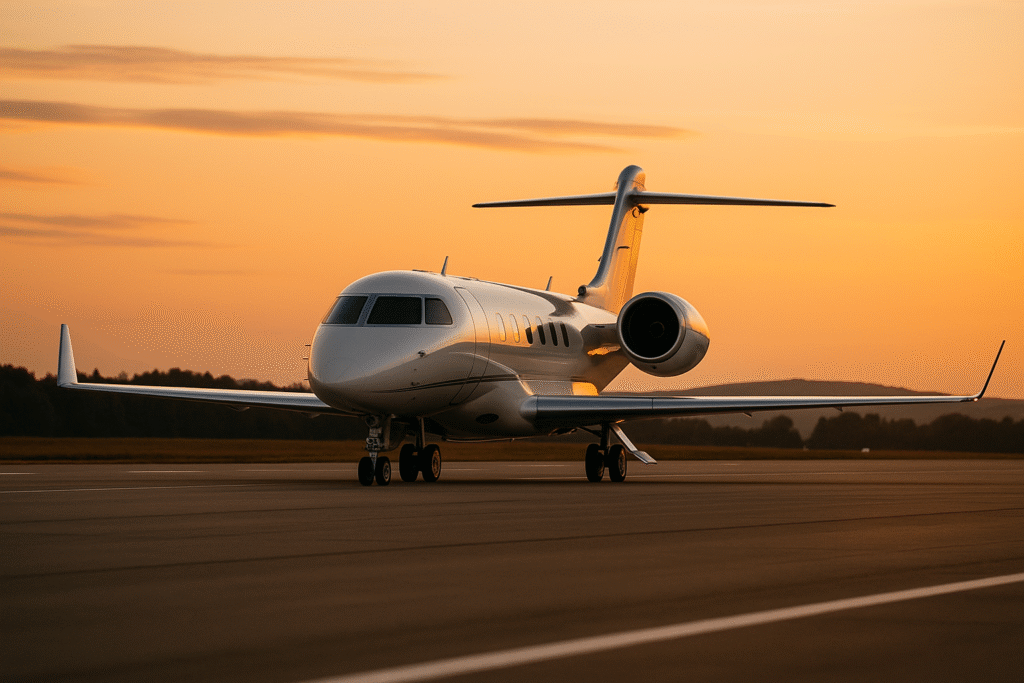
Fractional life is beautifully boring: the aircraft arrives, the coffee is right, the duty day is legal, the dog has a manifest, the school project finds an outlet. In a world that monetizes attention, boredom is a competitive advantage.
Leases — Holding the Keys Without Owning the Garage
A lease is a season of control. You take custody of an aircraft for a term, with or without crew. A dry lease gives you the hull and the responsibility; a wet lease bundles operations. It suits 150–300 hours a year, consistent missions, and a preference for brand continuity without capital outlay.
| Lease Type | Upfront | Monthly | Variable Costs | Editorial Notes |
|---|---|---|---|---|
| Dry lease (Light/Mid) | Security deposit 1–3 months | $60k–$160k | $1,500–$3,000/hr | You hire crew, carry insurance, manage hangar & maintenance |
| Dry lease (Super-Mid/Large) | Security deposit 1–3 months | $180k–$400k+ | $2,500–$5,000/hr | Best when routes are steady and calendar is known |
| Wet lease | Deposit varies | ~15–30% over dry | Fuel/handling billed | Turnkey operations, quicker to field |
Leasing feels like moving into a perfectly furnished apartment in a city you love — everything is there when you need it, and when the season passes, you hand back the keys.
Ownership — The Quiet Privilege of Always “Your” Jet
Ownership is authority. The aircraft wears your taste in leather, your approach to service, your family’s rhythms. It is also a company you must run. The rewards are absolute control and privacy; the costs are capital, crew, compliance, and the discipline to steward a complex machine safely.
Representative Models & Prices
| Category | Model | Seats | Range (nm) | Cruise (ktas) | Price New | Late Pre-Owned |
|---|---|---|---|---|---|---|
| Very Light Jet | Cirrus Vision Jet G2+ | 5–7 | 1,200 | 300 | $3.0–$3.5M | $2.1–$2.8M |
| Light Jet | Embraer Phenom 300E | 6–7 | 2,000 | 430–450 | $10–$11M | $6–$9M |
| Light Jet | Citation CJ4 Gen2 | 7–8 | 2,165 | 430–450 | $12–$13M | $7–$10M |
| Turboprop (single) | Pilatus PC-12 NGX | 6–9 | 1,800 | 280–290 | $6–$7M | $4–$6M |
| Super-Mid | Bombardier Challenger 3500 | 8–10 | 3,400 | 540 | $27–$30M | $17–$24M |
| Super-Mid | Embraer Praetor 600 | 8–9 | 4,000 | 530 | $22–$25M | $17–$22M |
| Long-Range | Gulfstream G500 | 12–16 | 5,300 | 560–585 | $47–$52M | $33–$42M |
| Long-Range | Global 7500 | 14–19 | 7,700 | 590 | $75–$85M | $58–$70M |
| Long-Range | Dassault Falcon 8X | 12–16 | 6,450 | 480–500 | $62–$70M | $35–$50M |
The Cost Anatomy (Illustrative Annuals)
Ownership is two budgets: the year you don’t fly (fixed), and the hours you do (variable). What follows is a steady-state sketch for well-run operations.
| Line Item | Light Jet | Super-Mid | Long-Range |
|---|---|---|---|
| Hangar & FBO | $60k–$120k | $120k–$220k | $180k–$350k |
| Insurance | $60k–$120k | $120k–$250k | $250k–$500k |
| Crew (2) comp & training | $240k–$380k | $320k–$520k | $450k–$800k |
| Management fee (opt.) | $60k–$120k | $90k–$160k | $120k–$240k |
| Maintenance reserves | $150k–$300k | $300k–$600k | $600k–$1.2M |
| Data/Nav/Weather subscr. | $10k–$25k | $20k–$40k | $30k–$60k |
| Fuel (per flight hour) | $1,200–$1,800/hr | $2,200–$3,400/hr | $3,800–$6,000/hr |
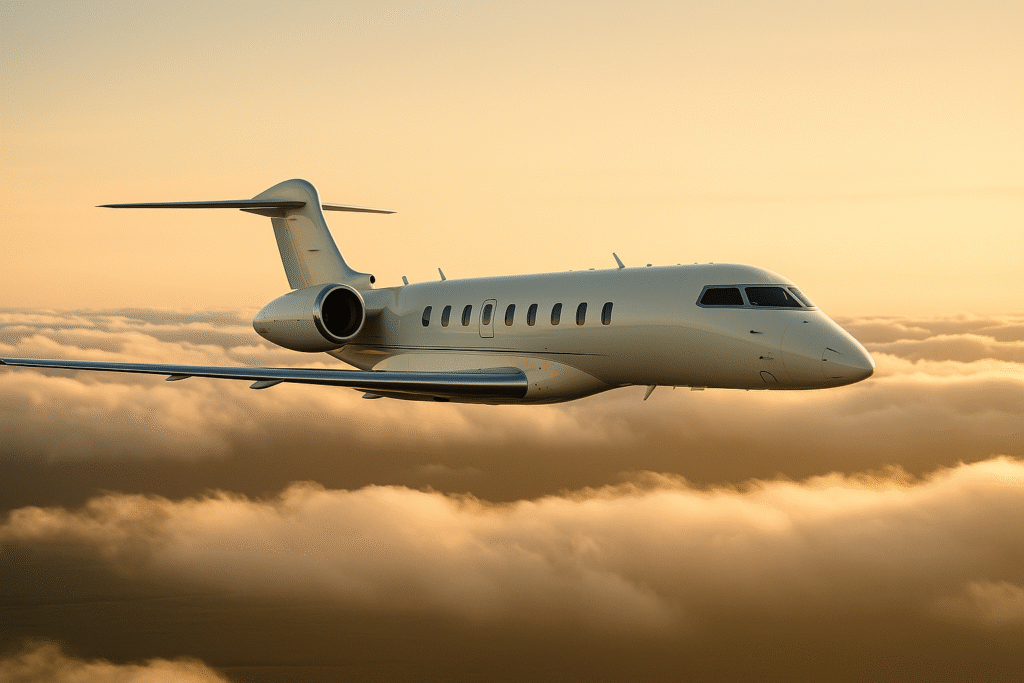
Depreciation: New metal loses most in years one to five. Late-model pre-owned reduces capital pain but may trade warranty runway for maintenance vigilance. At resale, immaculate records, engine programs, and cabin refresh pay for themselves.
Matching Hours to Rungs — The Editorial Cheat Sheet
| Annual Hours | Likely Fit | Indicative All-In | Editorial Guidance |
|---|---|---|---|
| 10–25 | Empty-leg / On-Demand Charter | $50k–$250k | Low commitment; demand flexibility and specify cabin age/Wi-Fi |
| 25–75 | Jet Card | $150k–$700k | Buy certainty; study peak day calendars and recovery policies |
| 75–200 | Fractional / Premium Card | $600k–$2.5M | Capital + monthly + hourly; lifestyle becomes predictably smooth |
| 150–300 | Dry/Wet Lease | $1.2M–$5M | Brand continuity, steady missions; ensure crew pipeline and hangar |
| 200–400+ | Ownership | $2M–$12M+ (ops only) | Max privacy/control; manage like a company, not a toy |
Every rung trades money for serenity. The right choice is the one that returns the largest share of your attention to the things that matter off the runway.

Service, Safety, and the Fine Print
Beyond price, diligence is culture. Demand safety ratings (ARGUS/IS-BAO), understand crew duty limits, and expect transparency on maintenance status and recovery aircraft. International itineraries add de-icing, handling, slots, permits, and cabotage rules. For owners, guard the sanctity of records; for cardholders, scrutinize CPI and fuel escalators. The most exquisite flight is the one that lands gently — and predictably.
The Editorial Matrix — Positives & Negatives by Option
| Option | Positives | Negatives | Best For |
|---|---|---|---|
| Empty leg | Lowest entry cost; premium metal at a whisper price | Unreliable timing; one-way; minimal control | Opportunists, leisure with flexible return |
| By-the-seat | Lower cost per traveler; polished ground experience | Shared cabin; fixed schedule/routes | Solo/couples on trunk routes |
| On-demand charter | No commitment; choose class per mission | Peak premiums; variable cabin standards | 10–75 hrs/yr with varied itineraries |
| Jet card | Guaranteed availability; capped rates; simplicity | Deposits; blackout rules; interchange fees | 25–150 hrs/yr seeking predictability |
| Fractional | Fleet reliability; concierge ops; consistent cabins | Capital buy-in; monthly + occupied hourly; exit risk | 75–200 hrs/yr valuing certainty |
| Dry lease | Control of tail; seasonal fit; brand continuity | You manage crew/ops; fixed monthly burn | 150–300 hrs/yr, steady routes |
| Wet lease | Turnkey operations; predictable lift | Higher monthly cost; term commitments | Interim capacity; special projects |
| Ownership | Maximum privacy/control; custom cabin; nonstop reach | Capex, depreciation, complexity; staffing | 200–400+ hrs/yr with stable missions |
Coda — The Value of Arrival
In the end, the arithmetic is simple. A good option removes friction; the right option removes regret. The rest is texture: the hush of the cabin at FL450, the glow of the galley light at midnight, the way the door opens to a waiting car and a familiar voice. Private flight is a choreography of details in service of one idea — that time, properly kept, is the most elegant luxury of all.
–