The Return of Bespoke Tailoring:
The Quiet Renaissance of the Gentleman’s Craft
–
In an era dominated by casualwear and fast fashion, one might assume the suit has lost its place. Yet among the world’s wealthiest and most discerning men, bespoke tailoring has staged a quiet but profound renaissance. A well-cut suit is no longer just clothing — it is a statement of identity, a shield of confidence, and in many cases, a family heirloom.
The Heritage of Bespoke Craftsmanship
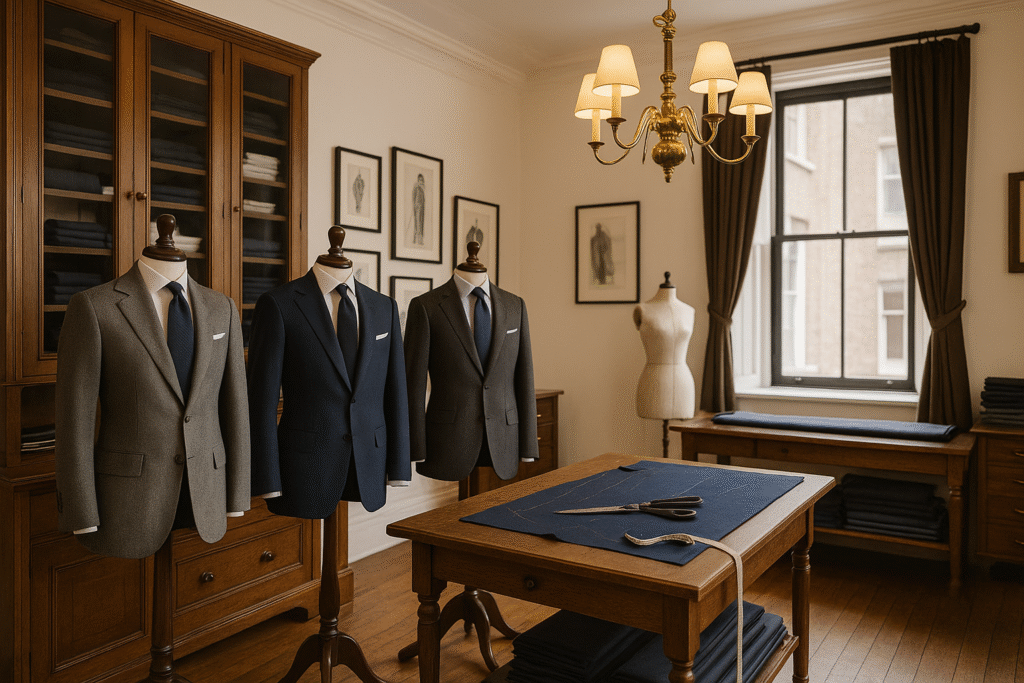
Bespoke tailoring finds its roots in the ateliers of Savile Row in 19th-century London and the sartorie of Naples. Unlike made-to-measure or off-the-rack garments, bespoke involves crafting an entirely new pattern from scratch, based on dozens of precise body measurements. It is a process steeped in tradition, ritual, and trust between tailor and client.
Each suit is touched by multiple artisans: cutters, coat makers, trouser makers, finishers. Hand-sewn buttonholes, pick-stitch lapels, and full floating canvases distinguish the true bespoke garment from industrial imitations. The result: a second skin of wool, silk, or cashmere, draped in harmony with the wearer’s frame.
Anatomy of a Bespoke Suit
To appreciate bespoke, one must understand its components. Every element contributes to the harmony of the whole:
- Canvas: The foundation of the jacket. A full floating canvas of horsehair or camel hair is stitched between fabric and lining, allowing the suit to mold naturally to the wearer over time. Half canvases and fused suits lack this evolution.
- Fabric: The soul of the suit. English mills like Holland & Sherry and Scabal favor heavier worsteds; Italian houses such as Loro Piana and Zegna excel in lightweight cashmere blends. Super numbers (Super 120s, 150s, 180s) denote fineness — though durability often declines as count rises.
- Lining: Often Bemberg cupro or silk, adding breathability and comfort. Bespoke linings may be custom-printed with monograms or motifs.
- Cut: British cuts emphasize structure and roped shoulders; Neapolitan tailoring is softer, with high armholes, natural shoulders, and spalla camicia (shirt-like sleeve attachment).
- Lapels: Peak lapels convey power; notch lapels whisper discretion. Width trends shift, but bespoke ensures proportion to physique.
- Pockets: Jetted, flapped, or patch — each choice conveys casualness or formality.
- Trousers: Side adjusters over belt loops, hand-sewn waistbands, and hems with or without cuffs.
Style, Colors, and Patterns
Bespoke tailoring thrives on subtlety, but choices abound:
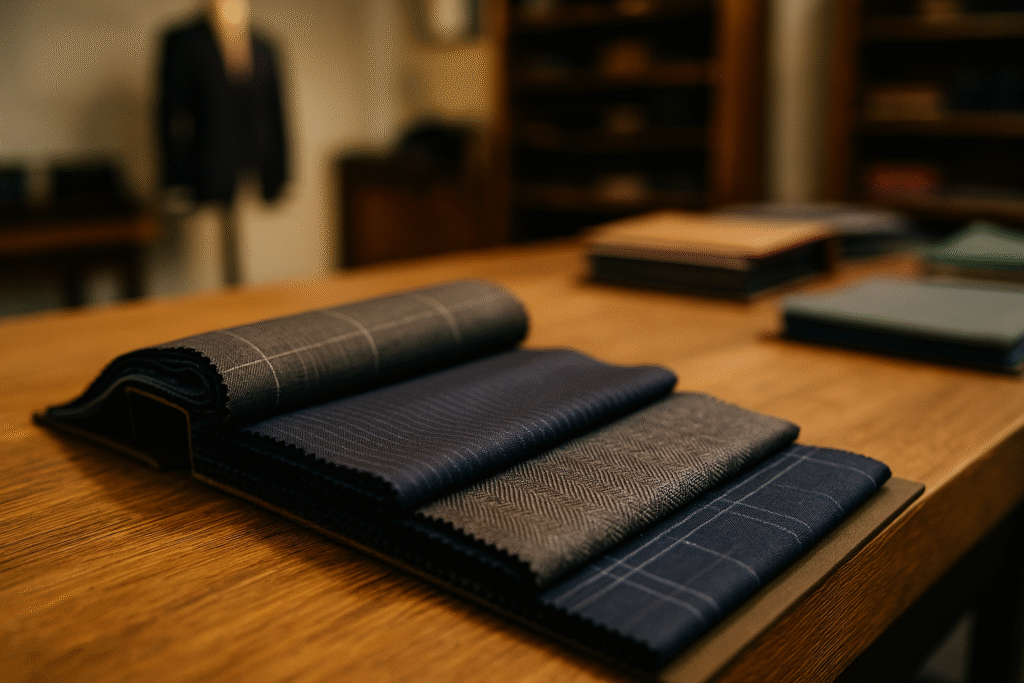
- Colors: Navy and charcoal remain the cornerstones of businesswear. Midnight blue is favored for black tie. Earth tones — brown, olive, taupe — add casual elegance.
- Patterns: Pinstripes project authority; windowpanes suggest confidence; houndstooth or glen check evoke heritage. The discreet prefer solid weaves with depth.
- Seasonality: Flannel for winter, fresco wool for summer, cashmere for cool evenings. A true wardrobe spans fabrics across climates and continents.
The Commissioning Process
The bespoke journey is as luxurious as the product itself. It begins with an intimate consultation: posture, lifestyle, and personal style are considered. Measurements are taken — often 30 or more — and a unique paper pattern is drafted. Several fittings follow: basted (sleeves uncut, rough assembly), forward (refined adjustments), and final delivery. The process may span 8–12 weeks, though Neapolitan houses sometimes move faster.
Maintenance & Longevity
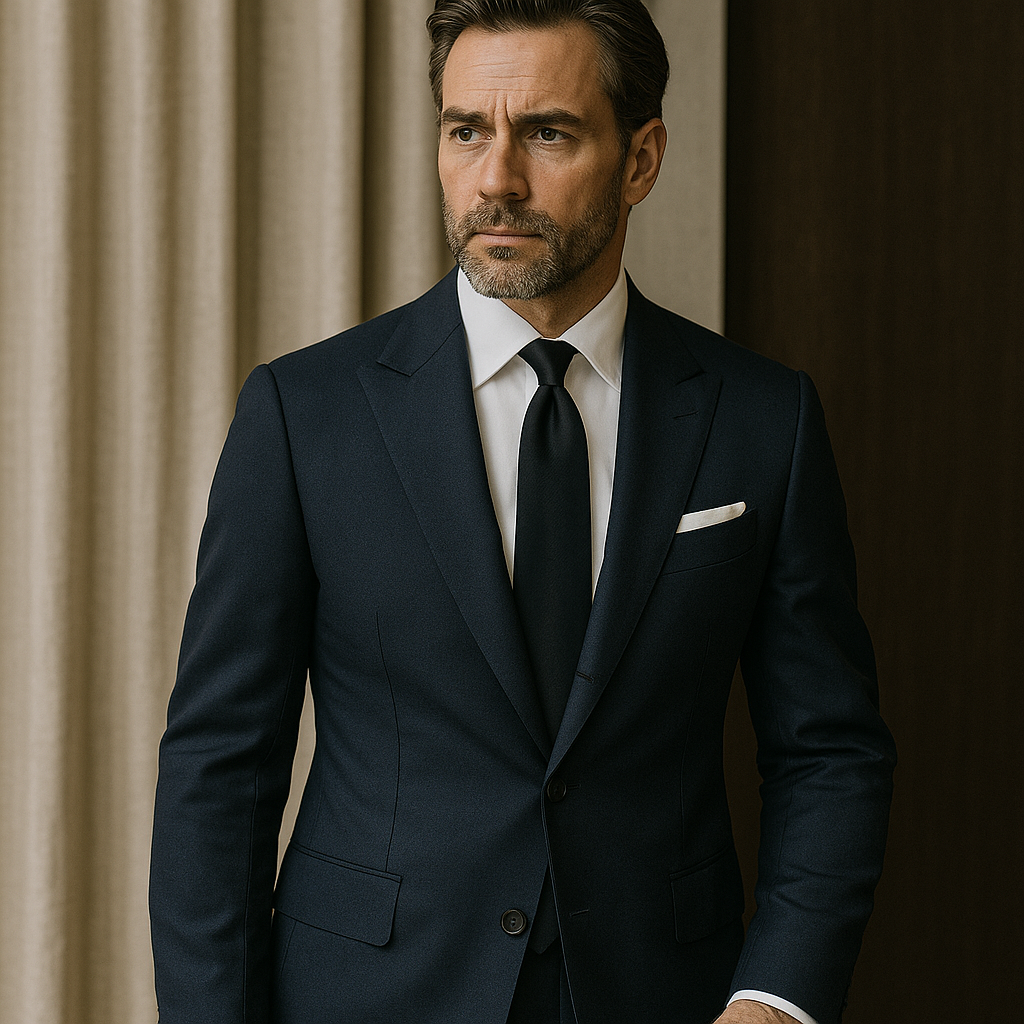
A bespoke suit is built to endure decades, but requires stewardship:
- Rotate suits; never wear the same suit on consecutive days.
- Use wide, contoured wooden hangers to preserve shoulder shape.
- Brush with a natural bristle brush after wear to remove dust.
- Dry clean sparingly — twice yearly at most — as chemicals damage fibers.
- Store with cedar blocks to repel moths.
- Press lightly with steam, never iron directly.
Costs Across the Bespoke World
Prices vary widely, reflecting geography, heritage, and house reputation:
| House / Region | Starting Price (USD) |
|---|---|
| Savile Row (Anderson & Sheppard, Huntsman) | $6,000–$9,000 |
| Neapolitan (Kiton, Cesare Attolini) | $8,000–$12,000 |
| Parisian (Cifonelli, Camps de Luca) | $10,000–$15,000 |
| American bespoke tailors | $4,000–$7,000 |
| Top luxury RTW (Brioni, Tom Ford MTM) | $4,000–$8,000 (not true bespoke) |
At the summit, houses like Kiton may command $20,000+ for suits woven from vicuña — the rarest natural fiber, costing thousands per meter.
Bespoke in a Modern Wardrobe
Today’s gentleman often pairs bespoke tailoring with casual elements. A navy bespoke jacket may be worn over denim, or a flannel double-breasted suit dressed down with a turtleneck. The language of bespoke adapts: timeless formality reimagined for contemporary life.
A bespoke suit is more than fabric and stitching — it is a statement of permanence in an impermanent age. For the UHNW client, it is the embodiment of quiet luxury: wealth expressed not through logos, but through mastery of craft, proportion, and discretion. Properly chosen and cared for, a bespoke wardrobe becomes an inheritance, a tactile expression of family legacy stitched in wool and silk.
–